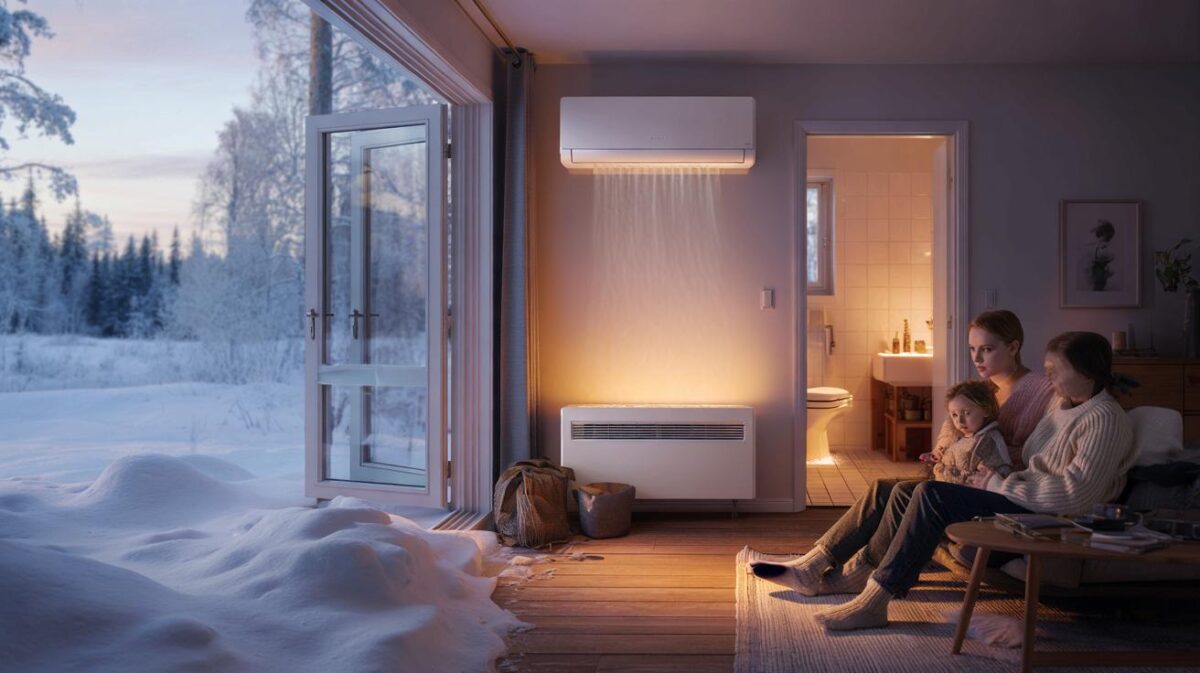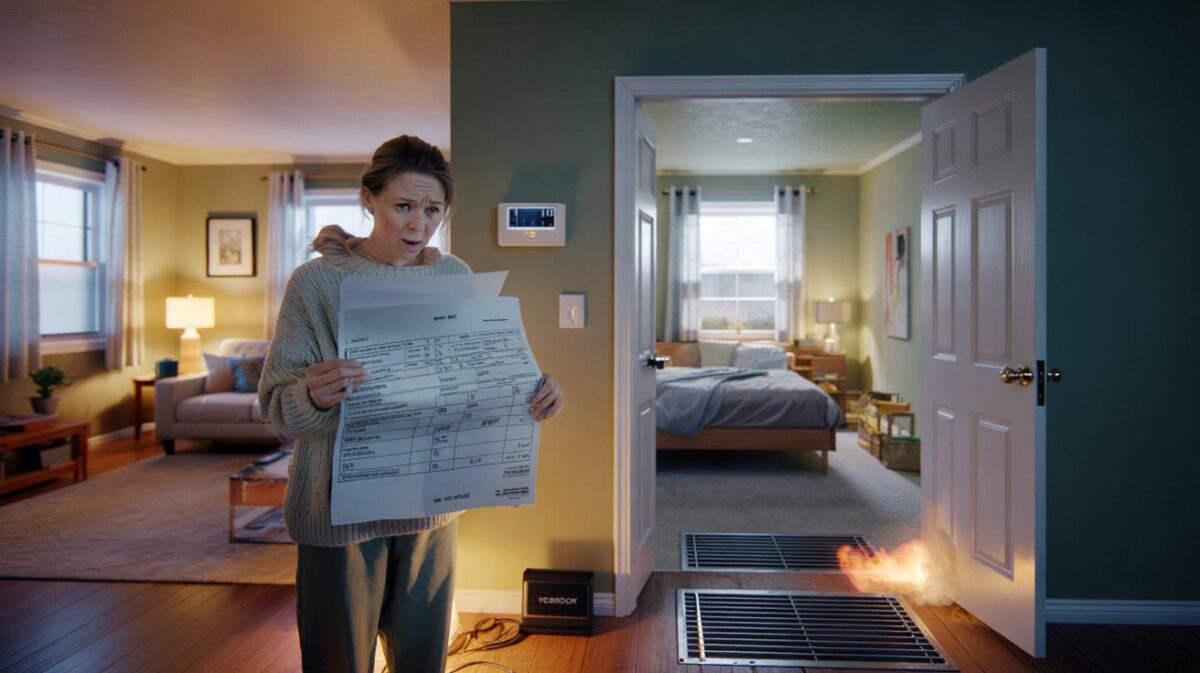
The thermostat glowed a confident 74°F, almost smug, as the radiator rattled and hummed. The air felt warm when you placed your hand just above the vent. Yet your toes stayed stubbornly icy, your hands lingered inside your sleeves, and that heavy chill clung to the back of your neck like a wet scarf. You turn the heat up one more notch, hoping for that cozy wave everyone posts on Instagram in October.
Nothing. The room looks warm. It just doesn’t feel warm.
That strange disconnect between the number on the wall and the cold in your bones is more common than anyone admits. And once you start noticing it, you can’t unsee it.
Why your home feels cold even when the heat is on
The first thing experts say, a bit annoyingly, is this: your thermostat is not your body. That little box is only measuring the air around it, usually in a hallway that nobody actually lives in. You might have a perfect 72°F there, while the sofa corner next to the big window sits at 64°F and your feet are parked right in that chilly pocket.
So your brain gets conflicting signals. Visually, things look “cozy”: blankets, candles, maybe even steaming mugs on the table. Physically, your skin is screaming that something’s off. That’s when you start chasing the number instead of the comfort.
Heating professionals see the same scene over and over: people cranking the thermostat higher and higher, then complaining they “never feel warm.” One HVAC technician I spoke with described a client who kept pushing the dial to 80°F on winter evenings. The gas bill was painful. The living room still felt drafty.
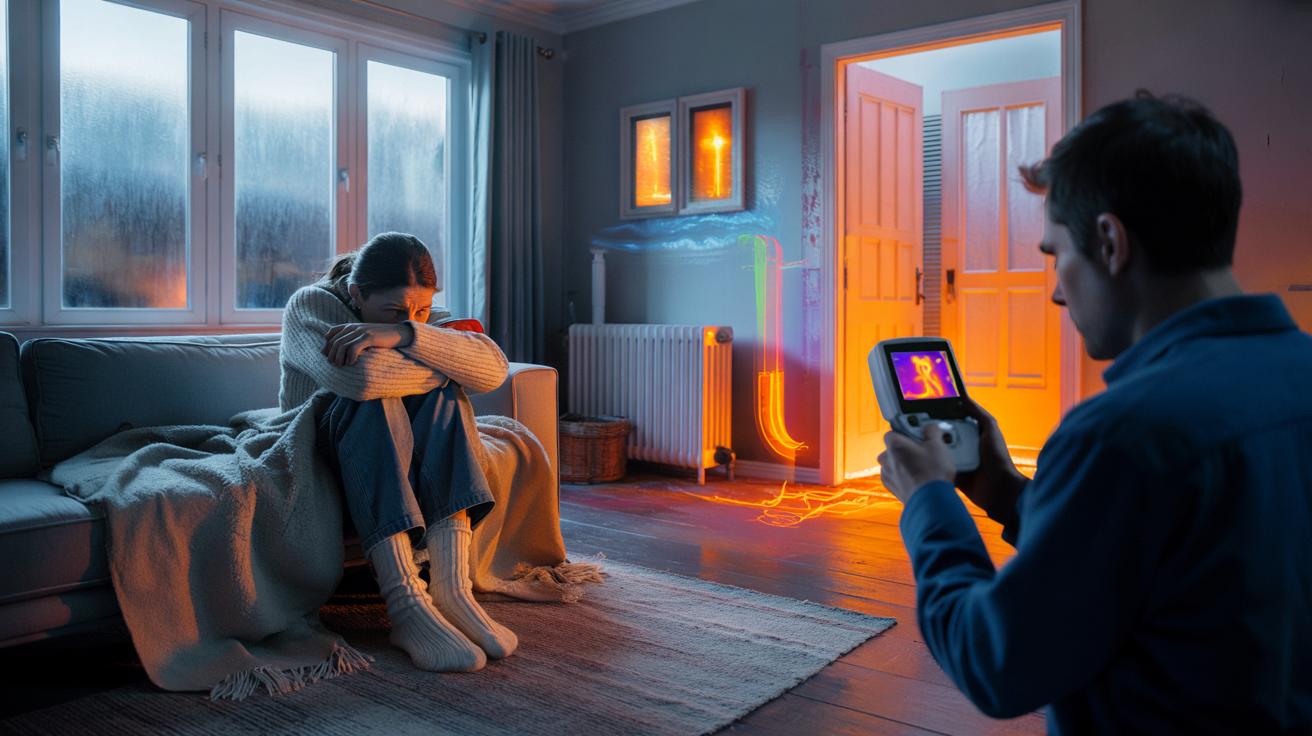
When he finally walked through the house with a thermal camera, the photos told the real story. The walls around the windows burned blue-cold. The floor near the entry door leaked heat like a sieve. The ceiling trapped a hot orange band of air that never came back down to human level. The air was warm. The surfaces were not.
That difference matters. Our bodies read comfort less from the air temperature and more from the temperature of the surfaces around us. Cold walls, bare floors, and leaky windows steal warmth from your skin by radiation and conduction, even if the air itself is “warm enough.”
On top of that, hot air rises and tends to get stuck at the ceiling. If you live in an older or tall home, you might literally be heating the top third of the room while your feet camp out in a cooler zone. *So you keep turning up the heat, but you’re just feeding a system that’s badly balanced, not broken.*
Simple fixes that warm you up without roasting your wallet
The least glamorous advice turns out to be the most effective: start with drafts, not the thermostat. Experts always go first to the places you almost never look closely at – the gap under the front door, that thin line where the window frame meets the wall, the letterbox, the old keyhole you forgot existed.
➡️ How your birth order determines your personality more than genetics (the research)
➡️ How a single houseplant in the bedroom increases deep sleep phases by 37%, nasa study
➡️ HVAC pros explain why closing vents in unused rooms actually increases heating bills
Roll up an old towel as a temporary draft stopper. Press your hand along the baseboards on a windy evening and feel where the cold sneaks in. Even painter’s tape across a rattling window frame for one season can change how your body reads the room. You’re not just keeping heat in. You’re stopping that invisible current of cold that constantly brushes your skin and convinces your brain that winter is winning.
Another overlooked trick is managing surfaces, not just air. Lay down a thick rug on bare floors, especially over concrete or tile. Throw a blanket over the back of that sofa pushed against an exterior wall. Add lined curtains instead of decorative, flimsy ones.
You’re building a softer “heat envelope” around the places where you actually sit, work, and sleep. We’ve all been there, that moment when you realize the warmest spot in the house is standing right next to the oven with the door half open. That’s your body telling you it craves radiant warmth, the kind you get from warm surfaces and direct heat, not just a number on a thermostat screen.
Energy engineer Laura M., who audits homes for a living, told me: “People think they have a heating problem, but nine times out of ten, they have a comfort problem. Their boiler is fine. Their insulation and habits are not. I always start with how the room feels where they actually sit, not what the thermostat says.”
- Seal and soften your cold zonesUse draft stoppers, weatherstripping, thick curtains, and rugs in the rooms you use most. Cutting the chill at the source beats blasting the whole house.
- Use your system smarter, not just harderBleed radiators, open internal doors strategically, and run ceiling fans on low reverse to push warm air down.
- Layer your comfortCombine modest thermostat settings with warm textiles, slippers, and targeted heaters for single rooms you occupy the longest.
- Watch humidity levelsDry air feels colder; a simple humidifier can make 68°F feel closer to 70°F without touching the controls.
- Get curious instead of frustratedWalk your home on a cold night with your hand, a candle, or even an incense stick to find drafts and “cold walls” before assuming your heating is failing.
The mindset shift that changes how your home feels all winter
Once you understand that “I keep turning up the heat and still feel cold” is usually a comfort puzzle, you start noticing your home differently. You might realize you always shiver on the corner of the couch that faces the big window, but feel fine on the end tucked near an interior wall. You might clock that you only feel truly warm when you’re under a blanket, not just because of the fabric, but because it shields you from radiant heat loss.
Instead of battling the thermostat, you begin to move furniture, add layers to specific spots, and close the doors of rooms you barely use so the warmth can settle where life actually happens.
| Key point | Detail | Value for the reader |
|---|---|---|
| Drafts beat thermostats | Sealing doors, windows, and floors often has more impact than raising the set temperature | Reduces bills while making rooms feel genuinely warmer |
| Surfaces shape comfort | Warm walls, floors, and fabrics matter as much as air temperature | Explains why rugs, curtains, and furniture placement change how you feel |
| Use heat where you live | Focus warmth on the rooms and corners you actually occupy | More comfort with less energy waste and frustration |
FAQ:
- Why do my hands and feet stay cold even when the room is warm?Your extremities are very sensitive to both drafts and radiant heat loss from cold surfaces. If the floor, window, or wall near you is chilly, your body loses heat faster than the warm air can replace it.
- Is turning the thermostat way up the fastest way to warm the house?Not really. Most systems heat at the same rate regardless of the target temperature. Cranking it higher just means the system runs longer, not faster, and you often overshoot real comfort.
- Could my insulation be the main problem?Often, yes. Poor or missing insulation lets warmth escape through walls, ceilings, and floors. That makes surfaces cold, which makes you feel cold even if the air is technically warm.
- Do space heaters help with this “cold but heated” feeling?Used safely, a small space heater can provide direct radiant warmth exactly where you sit. That local heat often feels better than raising the central thermostat across the whole home.
- How do I know if my heating system is actually faulty?If parts of your home never warm up, radiators stay lukewarm, or the system cycles constantly without reaching the set temperature, it’s worth a professional check. Let’s be honest: nobody really does this every single day, but an occasional inspection can save you a lot of cold evenings.