The first thing that hits you in a Finnish winter isn’t the cold outside. It’s the warmth inside. You open the door of an ordinary apartment in Helsinki, boots squeaking on the snow, and you’re met by a soft wave of heat that feels almost… quiet. No cast-iron radiators hissing. No bulky electric heaters glowing in the corner. Just a calm, even warmth that seems to rise from nowhere and wrap itself around your ankles. The owner shrugs and points at the ceiling and the bathroom floor. “We don’t really use radiators,” she laughs. “We just use what everyone already has.”
A simple everyday object.
Hidden in plain sight.
How Finland heats homes when radiators are almost an afterthought
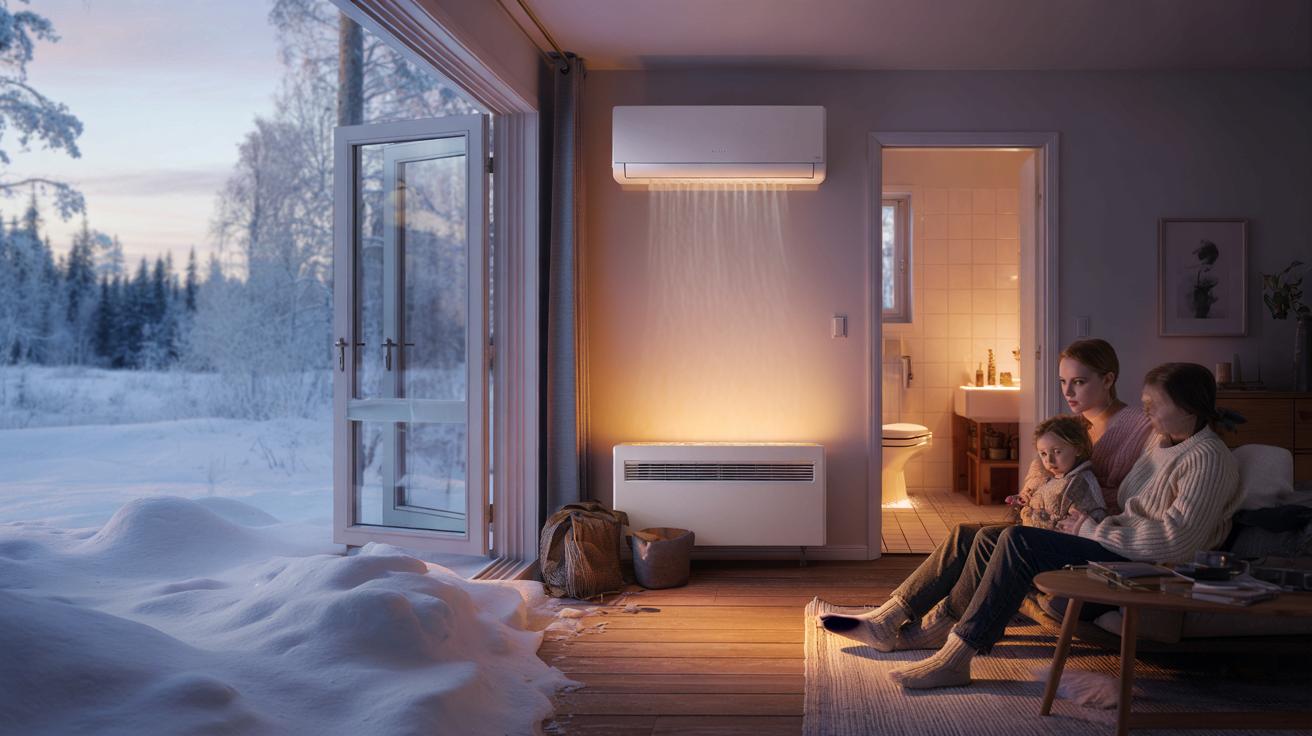
Spend a few days in Finland and you start noticing the same detail in almost every home. Thermostats on the walls. Warm tiles in the bathroom. Thick windows that never quite fog over. The heat doesn’t come from an old metal radiator shoved under a window. It comes from the building itself. From the floors. From the ducts. From devices you’d normally use to cool down a room on a hot day, not make it cozy in minus 20. The surprise is that the quiet white box hanging high on the wall in the living room is doing most of the work.
That “air conditioner” is secretly a heater.
In Scandinavia, and especially in Finland, the humble heat pump – that everyday appliance that looks like a split air-conditioner unit – has quietly replaced radiators in thousands of homes. In a small town like Joensuu, it’s not unusual to visit a 90 m² house where the only visible “heater” is a wall-mounted unit that looks like a standard AC. The floor is warm from embedded electric cables or water pipes. The bathroom has underfloor heating. And the main living area? Heated by what looks like the same device you see in any Mediterranean Airbnb.
The difference is how it’s used, and how well the house keeps the heat.
Technically, a heat pump is just an air conditioner that can run in reverse. It grabs warmth from outside air (yes, even when it feels freezing) and pushes that heat indoors. That single function changes everything. Instead of burning gas or blasting electric radiators, Finnish homes lean on **insulation, airtight windows and reversible AC-style units**. The gear isn’t futuristic. It’s already in millions of homes worldwide, often ignored on the wall until summer arrives. In Finland, it runs almost all year.
The trick isn’t owning the device. It’s learning to trust it.
The simple everyday object quietly replacing radiators
The “secret” object is that box you might already have above your balcony doors: the reversible air-conditioner, also known as an air-to-air heat pump. In a typical Finnish flat, it whirs gently all day, fan on low, barely noticeable. No glowing coils. No clanking pipes. Just a slow, steady stream of 22°C air drifting across the room. The device is small, but the strategy around it is big. The heat pump does the heavy lifting, while the building envelope – thick walls, triple glazing, tight doors – holds on to every bit of warmth.
You don’t fight winter with brute force. You outsmart it.
Take a family house in Tampere as an example. Outside, snow piles up to the windowsills and the river steams in the dawn light. Inside, the parents have set their wall unit to 21°C and basically forgotten about it since October. The pump sips electricity, roughly three times more efficiently than a standard electric heater, and pushes warm air toward the open-plan kitchen and living room. In the hallway, a small bathroom floor heater kicks in for showers. Bedrooms stay a little cooler on purpose, under thick duvets. The old steel radiators along the walls? They’re switched off most days, kept as backup for freak cold snaps.
Let’s be honest: nobody really does nightly thermostat gymnastics when this one box can quietly run all winter.
The reason this works in Finland and feels unthinkable in many other countries comes down to design layers, not magic technology. Homes are built or retrofitted around the idea of low, constant heat. Walls are heavily insulated, and leaks around windows are treated like mini emergencies. The heat pump, that familiar AC-looking unit, doesn’t have to blast like crazy to keep up. It just tops up the heat that the house is already holding on to. *When you start seeing the “AC” on the wall as your main heater, the whole energy story of a home flips.* Suddenly, electricity bills drop, radiators gather dust, and the quiet box becomes the hero of the living room.
It’s the same object, just used with a different mindset.
How Finns actually use these “AC heaters” day to day
The method is surprisingly simple: set it and leave it. Finnish homeowners often keep their heat pump running almost non-stop in winter at a stable temperature, usually between 20 and 23°C. No huge swings. No turning it off when they go to the supermarket. The fan speed stays on low or auto, pushing warm air gently across the room. Doors between rooms stay partly open so the warmth can drift. At night, they might nudge the setting down by one degree, not more.
The goal is a calm indoor climate, not dramatic bursts of heat.
Where many people slip up is treating a heat pump like a traditional electric heater. They crank it up to “high” when they’re cold, then shut it off as soon as they feel warm, expecting it to work like a hair dryer. That’s the opposite of what Finnish usage looks like. They know the magic lies in stability. The building materials warm up, the floors stop feeling icy, and the air temperature doesn’t rollercoaster. If you’ve ever stood shivering next to a blazing radiator, sweat drying on your skin, you know how exhausting that on-off cycle can feel. There’s something mentally soothing about a home that just stays at one, quiet level of comfort.
The heat doesn’t shout. It hums.
In Helsinki, one energy consultant summed it up this way: “The technology isn’t the revolution. The behavior is. We don’t wait to be cold and then attack the problem. We start warm and stay there.”
- Use a **reversible AC/heat pump** as your main heater, not as backup.
- Let it run on low, stable settings instead of constantly switching it on and off.
- Close obvious drafts around windows and doors so the device isn’t fighting leaks.
- Keep internal doors ajar so warm air can move more freely between rooms.
- Combine it with small, targeted helpers: a warm bathroom floor, thick curtains, good slippers.
What this Finnish habit quietly suggests about our own homes
Once you’ve sat in a Finnish living room in January, warmed mainly by what looks like an everyday AC, it’s hard not to look at your own place differently. You start wondering if that device on your wall could do more than just cool summer heatwaves. You notice the draft under your front door, the chill that sneaks through your windows at night, the way your radiators slam on, then fall quiet, then slam on again. You realize a lot of our winter comfort is built on habit, not on what actually works best.
And habit can be updated.
| Key point | Detail | Value for the reader |
|---|---|---|
| Use the “AC” as a heater | Most modern split units are reversible heat pumps | Potential to cut heating bills with what you already own |
| Prioritize steady warmth | Run the unit at a constant moderate temperature | More comfort, fewer cold-hot swings, better efficiency |
| Support with small fixes | Seal drafts, open doors, add rugs and curtains | Helps your unit work like Finnish systems without a full renovation |
FAQ:
- Can any air-conditioner really heat a home in winter?Only reversible ACs, also called heat pumps, can do true heating. If your remote has a “heat” or sun icon, you likely have this feature.
- Does a heat pump still work when it’s freezing outside?Modern models can draw heat from very cold air, though their efficiency drops in extreme temperatures and some homes keep a backup heater.
- Is it cheaper than gas or traditional electric radiators?In many cases yes, because a heat pump can deliver about three units of heat for every unit of electricity consumed.
- Will using the AC as a heater dry the air too much?It can feel a bit dry, but not more than regular heating. Many Finns use small humidifiers or houseplants to balance it.
- Can I copy the Finnish approach in an old, poorly insulated home?You can still benefit, though the gains are smaller. Start by reducing drafts and using the pump as a steady base heat, then upgrade insulation over time if possible.