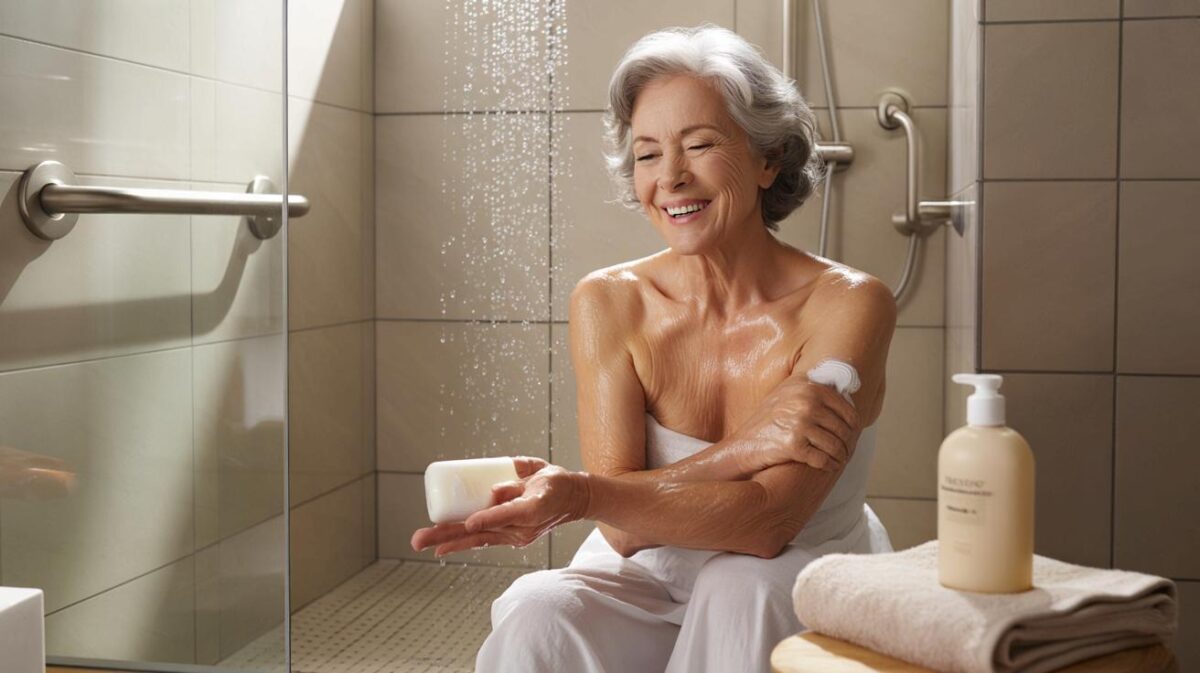
At 7 a.m., in the bathroom mirror, Claire watches a tiny drop of water trace the wrinkles near her neck. She is 67, retired teacher, and for the first time in years, she hesitates before turning on the shower. Yesterday her dermatologist told her, gently but firmly, that her daily hot showers were “aging” her skin faster than time itself. Her whole routine suddenly felt outdated, almost like an old habit she’d forgotten to question.
The steam rises, but her hand stays on the faucet.
How often does a body over 60 really need to be washed from head to toe? And how often is just too much?
After 60, your skin doesn’t live on the same schedule
There’s a detail nobody tells you when you blow out your 60th birthday candles: your skin clocks in for a completely different job. The protective barrier gets thinner, the natural oils show up less often, and what used to be a refreshing shower can quietly turn into a daily assault. The same routine that felt “clean” at 40 can leave your arms and legs burning and itchy at 70.
Dermatologists see it all the time: older adults with obsessive hygiene… and chronically angry skin.
The body doesn’t shout about it. It just tightens, flakes, and pulls a little more after every rinse.
Take Gérard, 72, former construction worker, who swore by two showers a day “to feel fresh”. When his shins started cracking and bleeding in winter, he blamed the cold, then his socks, then his washing powder. The culprit was much simpler: his daily full-body shower with hot water and industrial-strength soap.
His doctor suggested trying a radical experiment. One real shower every three days, lukewarm water, gentle cleanser only on strategic zones. On the other days, a quick “toilette” at the sink with a washcloth. Within three weeks, the itching that kept him up at night had almost disappeared.
The smell? Neutral. Not “grandpa at the gym”. Just a normal older body, finally left in peace.
The logic is almost cruel in its simplicity. After 60, the sebaceous glands slow down, the skin microbiome becomes more fragile, and the famous “good bacteria” that protect you from infections are washed away too often. A daily full scrub doesn’t just remove sweat, it strips the skin’s natural shield, especially on legs, arms and back.
*The more you strip, the more the skin panics and dries out.*
So the real hygiene question isn’t “Did you shower today?” but “Which parts actually needed proper washing today, and which could have been left alone?”
The real-life rhythm: a targeted routine, not a daily ritual
Here’s the routine many geriatric dermatologists now recommend, quietly, in their offices. A full-body shower two to three times a week, not every single day. On those days, focus on skin folds, underarms, groin, feet, and any area prone to sweat or friction. Use lukewarm water, stay under 10 minutes, and choose a gentle, fragrance-free cleanser. The rest of the body? Water only, or even nothing if the skin is very dry.
On non-shower days, a simple “top and tail” at the sink can do the job. Face, neck, underarms, private parts, feet. Clean, quick, efficient.
We’ve all been there, that moment when an older loved one is gently bullied into “Go shower, you smell!” even when they don’t. Many over-60s confess they force themselves into daily showers out of fear of being judged, not because they actually feel dirty. There’s a kind of social pressure to prove you’re still “on top of things” by stepping into the shower every morning.
Plain apartment truth: **the nose doesn’t lie**. If you’re not sweating heavily, not gardening for hours, not going to the pool, your body simply doesn’t generate the same amount of odor at 65 as it did at 25. The metabolism has slowed down… and so has the sweat.
Let’s be honest: nobody really does this every single day. Behind closed doors, a lot of older adults are already spacing out showers, but with a nagging guilt that they’re “letting themselves go”. That guilt is useless. What matters is a smart routine.
“After 60, my goal is comfort and protection, not squeaky-clean skin,” explains Dr. Leila Mourad, dermatologist in Lyon. “Full shower two to three times a week, daily targeted washing, generous moisturizer afterwards. That’s the combo that keeps people independent and confident for longer.”
- Full body shower: 2–3 times a week, short and lukewarm
- Daily: wash face, folds, private parts, feet
- Moisturize legs, arms, and back after every shower
- Change underwear daily and clothes often in contact with sweat
- Adapt frequency upward only if heavy sweating, heat wave, or intense activity
Living better with less: hygiene as comfort, not performance
Once the “daily shower or you’re dirty” myth begins to crack, something softer can take its place. Hygiene becomes less of a test to pass and more of a comfort ritual. Many people over 60 find that reducing shower frequency gives them more energy in the morning, less time in the bathroom, and fewer battles with dry, itchy skin. The body feels calmer, less attacked, less scrubbed into submission.
The real sign that the routine works is simple. You forget about your skin during the day. No pulling, no scratching, no small burning patches after a hot shower that lasted too long.
Of course, there are traps. Using strong deodorants to “compensate” for fewer showers can irritate fragile underarms. Turning the rare shower into a 30-minute spa session with very hot water can undo all the benefits. Some people also cling to harsh soaps “that foam well”, convinced that foam equals efficiency. The skin, on its side, is just begging for gentleness and shorter encounters.
Feeling guilty for not showering daily only adds another layer of useless stress. The body over 60 already has enough to manage.
For many readers, the real shift is mental. **Hygiene after 60 is no longer a race for cleanliness medals**. It’s more like a quiet pact with your own body: I’ll clean you where you need it, as often as you need it, and I’ll stop scrubbing away your defenses.
Some share this new rhythm with their kids or grandkids and are surprised to hear: “Honestly, that’s what I do too.” The generational gap on showers might be smaller than you think.
| Key point | Detail | Value for the reader |
|---|---|---|
| Adjust frequency | Full shower 2–3 times a week, daily targeted washing | Protects skin while staying genuinely clean |
| Protect the skin barrier | Lukewarm water, gentle cleanser, regular moisturizing | Less itching, dryness, and risk of irritation or infection |
| Prioritize comfort | Listen to body odors, activity level, and seasons | More freedom, less guilt, routine that actually fits your life |
FAQ:
- Question 1Do I risk smelling bad if I only shower two or three times a week after 60?Most of the time, no. Odor comes mainly from areas with sweat and bacteria (underarms, groin, feet). Cleaning those zones daily at the sink and changing underwear is usually enough to stay fresh.
- Question 2What if I exercise often or sweat a lot?If you walk fast, garden, or go to the gym, you can add an extra quick shower focused on sweaty zones. The key is to avoid scrubbing already dry areas, like shins and forearms, every single time.
- Question 3Can fewer showers really help with dry, flaky legs?Yes. By spacing out full-body showers and moisturizing after each one, many people notice less flaking and tightness within a few weeks. The skin has time to rebuild its natural oils.
- Question 4Is a bath better than a shower after 60?Long hot baths can be even more drying than showers. A short, lukewarm bath with a bit of oil or a very mild cleanser can be pleasant, but the same rule applies: not every day.
- Question 5How do I talk about this with a parent who resists change?Start from comfort, not criticism. Talk about itching, dryness, tiredness, and propose a “test month” with fewer showers and more moisturizer, rather than lecturing about what’s right or wrong.