The first cold snap of the season hits, and you do what feels smart.
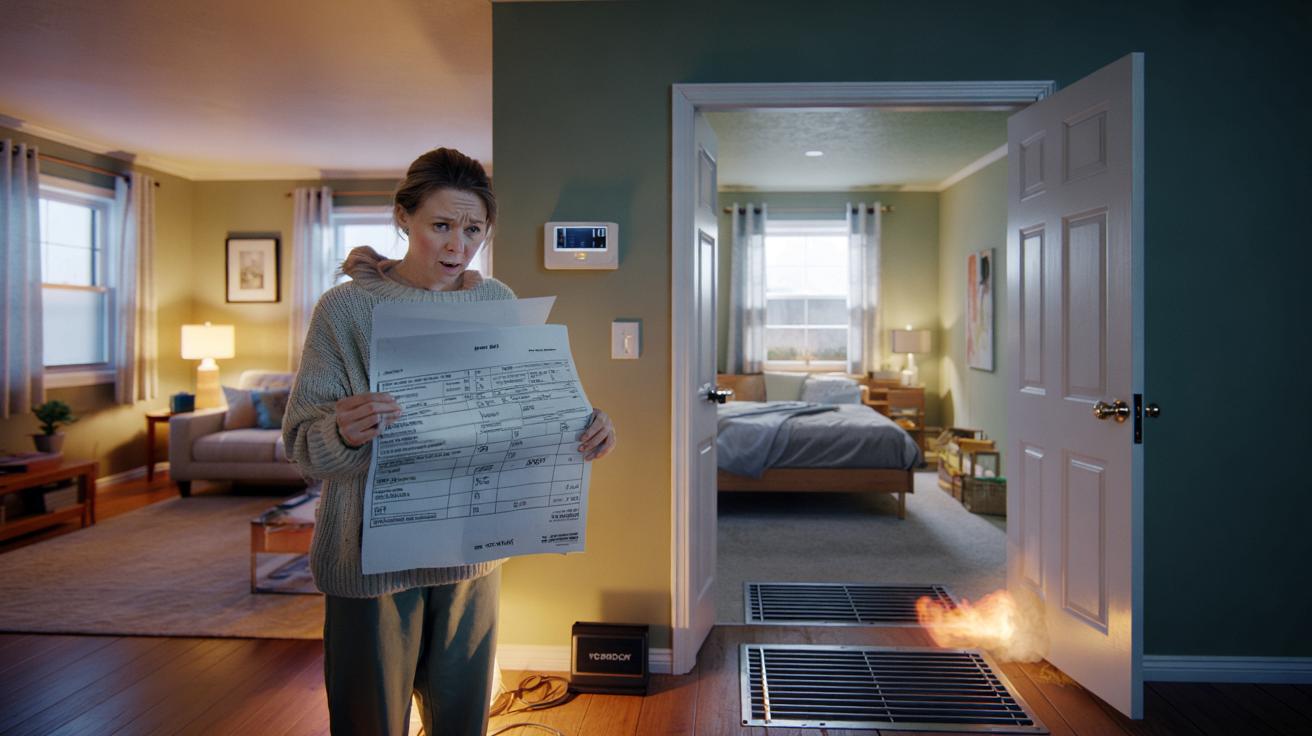
You walk around the house with a mug of coffee in one hand, nudging vents shut in the guest room, the storage room, that office you barely use. Less space to heat, lower bill, right? It feels satisfying, like turning off lights in an empty hallway.
A week later, your gas or power bill lands in your inbox.
You tap it open, expecting a pleasant surprise… and your eyes widen. The total has barely moved. Maybe it’s gone up.
Something in that logic is broken.
And HVAC pros say they know exactly what.
Why closing vents backfires on your heating bill
On paper, closing vents in unused rooms sounds wonderfully clever. You imagine heat being “rerouted” to the rooms you love, and your furnace working less hard because there’s less space to warm up.
That’s just not how forced-air systems are built. Your furnace or heat pump doesn’t suddenly become smaller when you push a vent lever. It still fires up with the same power, the same fan, the same ductwork. Only now, that air has fewer places to go.
The system notices that.
And not in a good way.
Talk to any seasoned HVAC tech and you’ll hear the same story. A homeowner proudly announces they’ve “optimized” their house by shutting 5 of 15 vents. A month later, they’re calling back because the living room feels stuffy, the upstairs is too warm, and the system is short-cycling like crazy.
One technician in Minnesota told me about a family who closed every vent in their finished basement to “save money.” Within a season, the duct seams down there started to whistle and leak. Their energy use went up by nearly 12% on their utility’s comparison chart.
They thought they were being efficient.
They were actually choking the system.
The core problem is pressure. Modern ductwork is sized for a certain airflow. When you close vents, pressure inside those ducts climbs. That can push heated air out through tiny gaps and joints you never see, straight into your walls, attic, or crawlspace. You’re paying to warm the skeleton of your house.
➡️ I kept turning up the heat and still felt cold: experts explain this common home problem
➡️ How a single houseplant in the bedroom increases deep sleep phases by 37%, nasa study
➡️ How your birth order determines your personality more than genetics (the research)
Your blower motor also has to fight that extra pressure. Older PSC motors just hog more electricity as they strain. Newer variable-speed motors try to compensate by spinning faster, running longer, or both. Either way, your energy use doesn’t fall the way you hoped.
So the plain-truth sentence is this: closing vents doesn’t “save” heat, it just moves your problems where you can’t see them.
What HVAC pros actually recommend instead
The pros’ favorite move is surprisingly simple: keep most vents fully open, and think in terms of balance, not shutdown. That starts with walking the house and noticing where you’re genuinely uncomfortable. Too warm bedroom? Freezing hallway? Write it down.
Then, work in small steps.
Adjust a vent a little, not all the way. Maybe open a cold room’s vent fully and ease a hot room’s vent to 75%, never fully shut. Let the system run for a full day or two before touching anything else. You’re nudging, not slamming doors.
This is how you cooperate with your HVAC, instead of wrestling it.
We’ve all been there, that moment when you try three “hacks” at once, then have no idea what actually changed anything. With heating, that confusion gets expensive fast. Pros say one of the biggest mistakes is treating vents like on/off switches, not like dimmers.
Another common error: closing vents in rooms with thermostats or major return grilles. The system needs those spots to “feel” the real temperature and breathe properly. When they’re blocked or starved, your thermostat starts getting bad data, so the furnace keeps running longer, chasing a comfort level that never stabilizes.
Let’s be honest: nobody really walks around their home recalibrating vents every single day. That’s why small, steady adjustments — and then leaving them alone — tend to win.
One veteran installer in Ohio put it bluntly:
“Every time I see half the vents shut, I also see higher bills and a tired furnace. People don’t save money by fighting the system. They save by letting it do what it was designed to do — and tightening up the house around it.”
His advice, and that of many others, centers on simple, boring, extremely effective steps:
- Seal air leaks first (windows, doors, attic hatches) before touching vents.
- Keep supply vents and returns open and unobstructed by rugs or furniture.
- Use programmable thermostats to lower temps when you sleep or are away.
- Close doors gently, not vents aggressively, in truly unused rooms.
- Have ducts inspected and cleaned if airflow feels weak or uneven.
*The quiet upgrades nearly always beat the dramatic little tricks.*
So what should you actually do with unused rooms?
If you have rooms you rarely enter — a guest room, a storage space, a hobby room that’s on pause — the pro move isn’t to “cancel” them. It’s to let them stay part of the system, just at a calmer, slightly cooler level.
You can keep the vent open and simply close the door most of the way. That lets the room drift a bit cooler without creating a big pressure spike in your ducts. Some homeowners also drop the thermostat by a couple of degrees for the whole house, then use a small space heater briefly where they actually sit.
That way, the central system runs gently and evenly, and your comfort follows you, not the other way around.
| Key point | Detail | Value for the reader |
|---|---|---|
| Vent closing raises pressure | Shutting vents forces air into fewer ducts, boosting static pressure and leaks | Explains why bills don’t drop and equipment wears faster |
| Small adjustments beat full shutdowns | Partially open vents, adjust room by room, avoid cutting off returns | Gives a realistic, low-effort way to improve comfort |
| Whole-house strategy wins | Combine open vents with air sealing, thermostat settings, and regular maintenance | Offers a clear path to real, measurable savings |
FAQ:
- Question 1Does closing just one or two vents still increase my heating bill?
- Answer 1Closing a single vent probably won’t wreck your system, but it still nudges pressure up. If your ducts are already leaky or your blower is aging, even small changes can add stress without delivering real savings.
- Question 2Is it okay to close vents in the basement to push more heat upstairs?
- Answer 2Most pros say no. Basements often house major duct runs and returns, and cutting them off can disrupt airflow and create condensation or moisture issues along with higher energy use.
- Question 3What’s better than closing vents for saving money on heat?
- Answer 3Air sealing around windows and doors, adding attic insulation, using a smart thermostat, and servicing your furnace regularly all beat vent-closing by a mile in both savings and comfort.
- Question 4Can closing vents damage my furnace or blower?
- Answer 4Over time, high duct pressure can shorten equipment life, strain motors, and increase the risk of cracked heat exchangers, especially on older systems that weren’t designed for those conditions.
- Question 5What should I do if some rooms are always colder than others?
- Answer 5Start by fully opening vents in the cold rooms, checking that returns aren’t blocked, and having an HVAC tech look at duct sizing and balancing. Sometimes a simple damper adjustment or added return can transform those spaces.