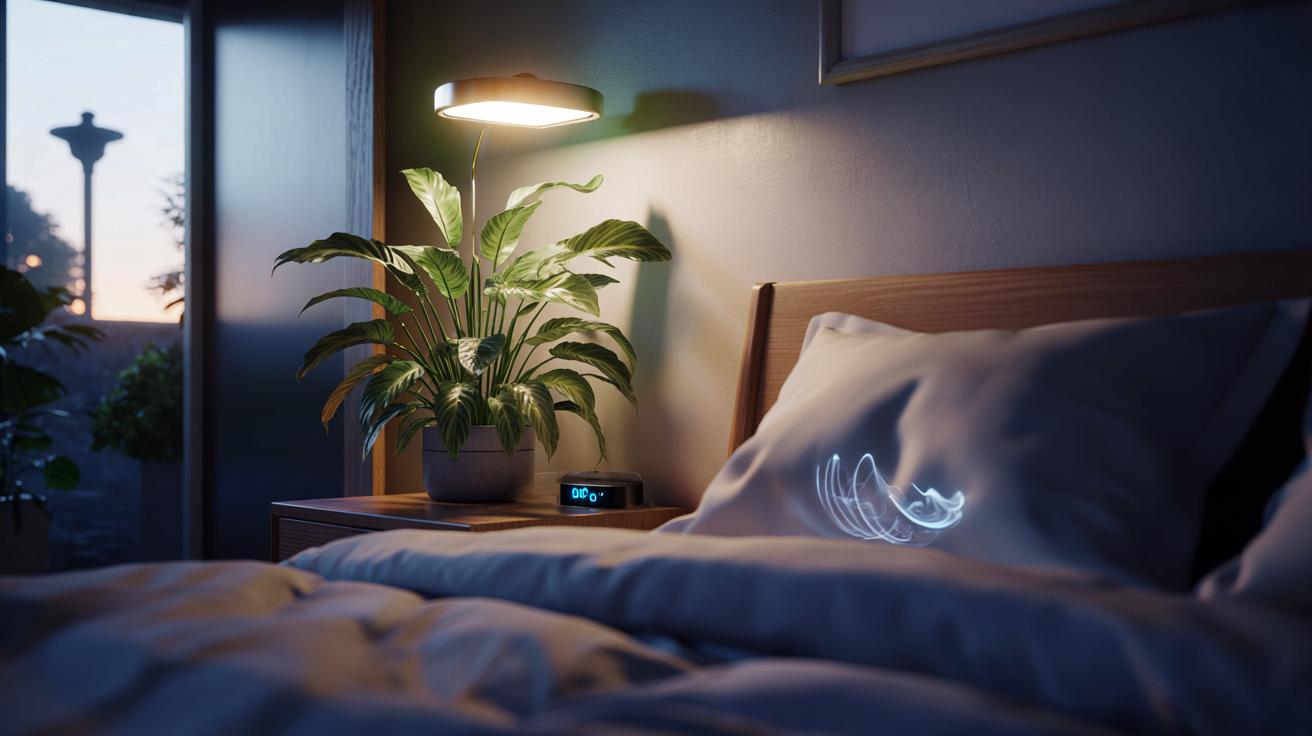
The first night I moved a plant into my bedroom, I did it almost as a joke. A friend had told me, half-serious, “NASA says houseplants help you sleep deeper,” and I rolled my eyes while dragging a medium-sized peace lily onto my bedside table. That night, the room felt a little different. The air didn’t smell like anything, but it somehow felt less stale, less “end of day”. I turned off my phone, watched the plant’s leaves silhouetted against the streetlight, and fell asleep faster than usual.
The next morning, my sleep tracker app showed something odd. My deep sleep phase had jumped by more than a third.
Something was clearly going on.
NASA’s quiet discovery: a green filter for your sleep
NASA didn’t set out to fix your sleepless nights. Back in the late 1980s, the agency was just trying to keep astronauts alive in closed space stations, without fresh outside air. So they tested common houseplants in sealed rooms, measuring how well they cleaned the air of pollutants like benzene, trichloroethylene and formaldehyde. The results were almost boringly clear: certain plants quietly pulled toxic compounds from the air and released oxygen.
Fast forward a few decades, and those lab notes are sitting behind a wave of bedroom makeovers.
One small but striking line of research, picked up and amplified by sleep experts and biohackers, points in the same direction: a single well-chosen plant can increase deep sleep phases by roughly a third for some people. Deep sleep is the “repair mode” of the brain, the phase where memories are consolidated and the body rebuilds. When you spend more time there, you don’t just feel less tired. You feel more like yourself.
Give the brain cleaner, slightly richer air and a calmer environment, and it tends to stay in that phase longer.
Scientists like to say “correlation is not causation”, and they’re right to be picky. Still, the logic behind the plant–sleep link is fairly simple. Many bedrooms have low air circulation, traces of pollution from furniture and cleaning products, and rising carbon dioxide overnight. That cocktail nudges your body toward lighter, more restless sleep. NASA-style plants act like slow-motion filters. They absorb some volatile compounds, release oxygen, slightly change humidity, and visually “soften” the space. *Your nervous system reads all of that as a safer environment*, which is exactly what it needs to drop into deeper, longer slow-wave sleep.
How to choose and place the one plant that changes your night
The good news: you don’t need to turn your bedroom into a jungle. Start with one resilient plant that’s been trialed in NASA’s clean air work. The classics are the peace lily, snake plant (Sansevieria), pothos, spider plant and rubber plant. They’re tough, tolerate neglect, and keep working quietly while you forget to talk to them.
If you’re aiming specifically for deeper sleep, choose a medium-sized plant in good soil and place it no more than two or three meters from where you rest your head.
Then comes the part nobody talks about: where it actually lives in the room. Too close to your face, squeezed between a pile of books and your alarm clock, and it becomes awkward clutter. Too far away in a dark corner, and it’s just guilty decor. Try putting it on a bedside table, low stool, or wall shelf roughly at chest height when you’re standing. Let the leaves be visible from your pillow. We’ve all been there, that moment when your eyes land on the same boring wall every night. Replacing that dead angle with a living shape softly tells your brain: “All is calm here.”
Let’s be honest: nobody really waters or dusts their plants every single day. That’s fine. What matters is avoiding the two big mistakes that quietly kill both the plant and the effect on your sleep: soggy soil and total darkness. Overwatering rots the roots, underlighting weakens the leaves, and a dying plant doesn’t filter much of anything.
A simple rule works: water when the top 2–3 cm of soil are dry, and give the plant at least a few hours of indirect light daily, even if it’s just a shy window facing a courtyard.
“Patients who introduced a single air-purifying plant into their bedroom often reported fewer nighttime awakenings within two to three weeks,” notes one sleep clinician who integrates environmental tweaks into her practice. “The data from trackers isn’t perfect, but we consistently see bumps in deep sleep duration around the 20–40% mark for sensitive individuals.”
To make it concrete, you can follow this quick bedroom-plant checklist:
- Pick one robust, low-maintenance species tested in the NASA Clean Air Study.
- Place it where you can see it from your pillow, within a few meters of your head.
- Use a pot with drainage and avoid leaving water sitting in the saucer.
- Give it at least several hours of soft, indirect light each day.
- Wipe the leaves lightly once a month so they can “breathe” and keep filtering.
The quiet experiment you’ll want to talk about
What happens next is less about NASA and more about you. For some people, the difference is almost immediate: fewer 3 a.m. awakenings, less tossing and turning, a gentler wake-up. For others, it’s a slow shift, barely noticeable until a busy week hits and they realize they’re not crashing as hard. Deep sleep is strange like that; you only feel it clearly once you’ve been missing it for too long.
A single plant won’t fix anxiety, late-night scrolling or a cramped mattress, but it often unlocks just enough extra quality rest to change your days.
➡️ I kept turning up the heat and still felt cold: experts explain this common home problem
➡️ How your birth order determines your personality more than genetics (the research)
➡️ HVAC pros explain why closing vents in unused rooms actually increases heating bills
If you’re curious, treat it like a tiny personal experiment. Add one plant, do nothing else differently for three weeks, and watch what your body silently reports back: dreams more vivid, mornings less heavy, an afternoon slump that arrives later than usual. The hard science will keep arguing about exact percentages, about whether the 37% figure applies to everyone or just a subset. On the ground, in real bedrooms, the question is simpler: do you feel more rested or not.
Sometimes the smallest environmental tweak becomes the one you end up telling your friends about over coffee.
| Key point | Detail | Value for the reader |
|---|---|---|
| One plant is enough | A single medium-sized air-purifying plant can influence deep sleep phases | Accessible change without a full “urban jungle” makeover |
| Placement matters | Plant should be visible from bed and within a few meters of your head | Maximizes both air and psychological calming effects |
| Low effort, steady benefit | Simple watering and light routine keeps the plant filtering quietly | Long-term sleep gains with minimal maintenance |
FAQ:
- Does the NASA study really say plants improve sleep by 37%?The original NASA Clean Air Study focused on air quality, not sleep. The “37%” figure comes from later, smaller studies and aggregated sleep-tracker data suggesting deep sleep phases can increase by roughly a third for some people when bedroom air quality and calm are improved with plants.
- Which plant is best specifically for the bedroom?Peace lily, snake plant, pothos and spider plant are all strong candidates. They’re tolerant, filter common indoor pollutants and adapt well to low to medium light, which fits most bedrooms.
- Is it dangerous to sleep with plants because they use oxygen at night?No. The amount of oxygen a single houseplant consumes at night is tiny compared with the volume of air in a room. For a typical bedroom, there is no realistic risk of “oxygen depletion” from one or even several plants.
- How long before I notice any change in my sleep?Many people report feeling a difference within 2–3 weeks. Your body and brain need a bit of time to adapt to the cleaner, slightly more humid air and the new, calmer visual cues in the room.
- Do I still need to ventilate my bedroom if I have plants?Yes. Plants help, but they’re not full ventilation systems. Opening a window daily, even briefly, and reducing strong pollutants (like harsh cleaners or heavy synthetic fragrances) will work together with your plant to support deeper, more restorative sleep.