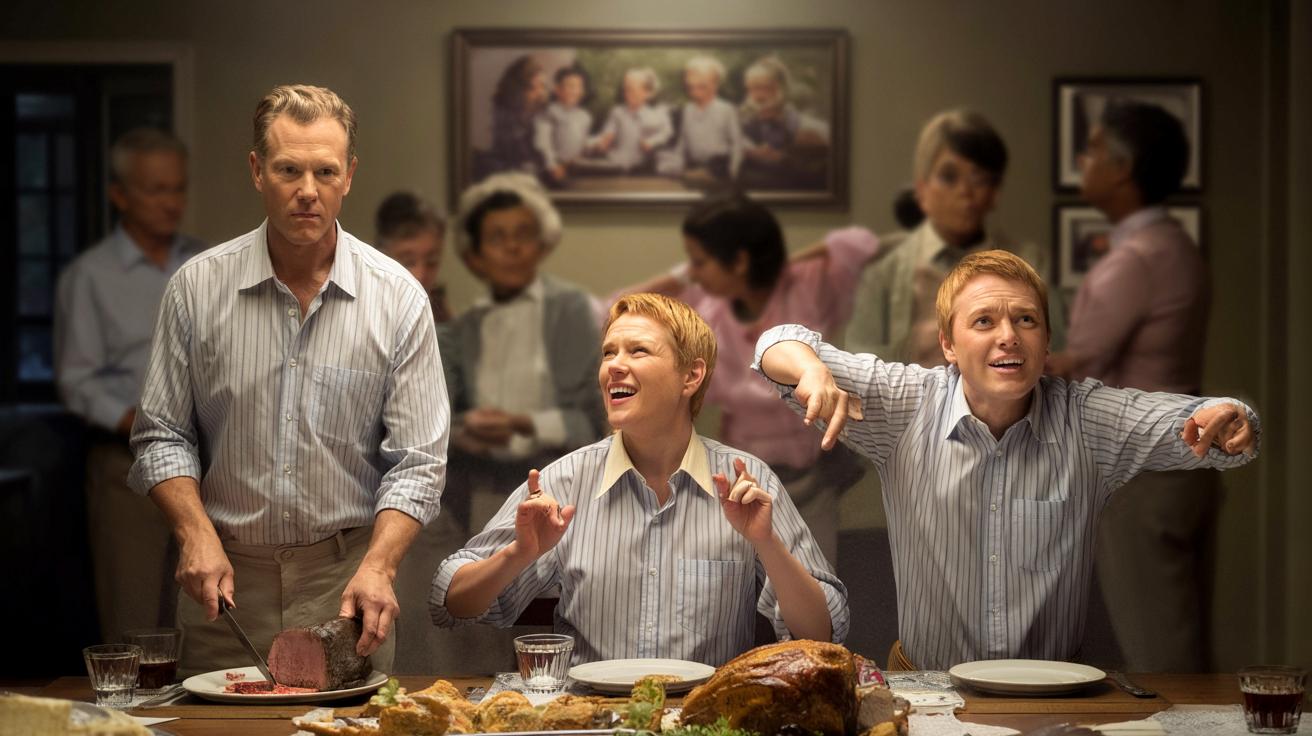
At a crowded Sunday lunch, three grown siblings begin doing what they’ve always done. The eldest is slicing the roast and giving instructions without being asked. The middle one cracks jokes, translating tension into laughter. The youngest swings between charming and provocative, testing how far they can go before someone frowns. Same parents. Same house. Very different humans.
As the conversation drifts from careers to relationships, you can almost see the roles they’ve worn since childhood slip back on like old sweaters. The responsible one. The peacemaker. The rebel.
Genetics didn’t write that script alone.
Why birth order quietly shapes who you become
Spend five minutes in any family gathering and you’ll spot a pattern. Firstborns stepping up, seconds smoothing things over, youngest pushing boundaries like they’re made of rubber. Parents call it “personality”. Researchers call it **birth order effects**.
For decades, psychologists have watched these roles appear, again and again, in families from wildly different backgrounds. Not perfectly, not mechanically, but often enough to be disturbing if you thought your traits were purely “yours”.
The invisible detail most of us miss: you weren’t just born into a family. You were born into a position. And that position had rules.
One huge study from the University of Leipzig followed more than 20,000 people across several countries. What they found sounded like a family dinner in data form. Firstborns scored slightly higher on measures linked to leadership and perceived intelligence. Later-borns leaned more toward openness to new experiences, risk-taking, and unconventional choices.
The differences weren’t cartoonishly huge. Your brother isn’t a CEO just because he arrived first. Yet those small nudges, repeated every day across years of parenting, siblings, and expectations, build up into surprisingly stable tendencies.
We’ve all been there, that moment when you visit someone’s family and suddenly their quirks make complete sense.
The logic behind it is simple, almost painfully so. Parents treat a first baby like a fragile moon landing. Every milestone is a mission. By the time the second or third arrives, they’re more relaxed, more distracted, and juggling more chaos.
➡️ HVAC pros explain why closing vents in unused rooms actually increases heating bills
➡️ I kept turning up the heat and still felt cold: experts explain this common home problem
➡️ How a single houseplant in the bedroom increases deep sleep phases by 37%, nasa study
That means different levels of attention, pressure, and freedom depending on when you showed up. The eldest often becomes the “assistant parent”, drafted into responsibility early. Middle children learn diplomacy, living between a high-achieving older sibling and a cuter, more protected youngest. The baby of the family grows up in a looser, more flexible atmosphere, where rules have been tested—and sometimes broken—already.
Same DNA roulette. Different psychological weather.
First, middle, youngest: what research says about your role
Let’s start with firstborns. Studies show they tend to score higher on conscientiousness: planning, organizing, finishing what they start. They’re the ones who remember the passwords, the appointments, and the exact way their parents like their coffee.
From day one, they meet adults more than peers. No older siblings, no chaos to hide in. So they imitate the people in charge, absorbing adult language, worries, and expectations early. Many of them learn that love comes packaged with standards.
That “good kid” label sticks long past childhood.
Take Maria, 38, the eldest of three. Her parents emigrated and leaned hard on her to translate paperwork, watch her brothers, and get “stable” grades. She entered engineering, not because she loved it, but because it sounded serious and safe. Her younger brother tried three careers in a decade. Her sister traveled the world with seasonal jobs.
At a family barbecue, when something goes wrong—the grill gas runs out, the dessert burns—everyone still looks at Maria. She laughs, rolls her eyes, and fixes it. Later, she admits she doesn’t know who she’d be if she wasn’t “the one who handles things”. Genetics gave her a temperament. Birth order weaponized it.
Middle children grow up in the in-between. They’re rarely the first to do anything. They’re also not the baby that everyone still calls “cute” at 27. Research often paints them as more socially flexible, sometimes more independent from the family line, and occasionally more willing to create their own separate worlds—friend groups, identities, paths.
The youngest? Studies link later-borns with higher risk-taking and creativity, especially in fields where breaking norms brings rewards. Look at the family of many athletes, comedians, or artists and you’ll often find the youngest sibling grabbing the spotlight. They arrive in a home where the parental fear has faded a little, rules have been negotiated, and older siblings have already absorbed some of the pressure.
Let’s be honest: nobody really does this every single day, but parents do tend to relax those strict bedtimes and “no screens” rules by the third kid.
What to actually do with this knowledge about yourself
There’s a simple, slightly uncomfortable exercise that reveals how much birth order still pulls your strings. Sit down with a sheet of paper and write three columns: “Expectations I felt as a child”, “How I behaved”, “What I still do now”.
If you’re the eldest, you might write: “Keep everyone safe”, “Be the example”, “Don’t fail”. Middles might write: “Stay out of trouble”, “Keep the peace”, “Find my own lane”. Youngests might add: “Make them laugh”, “Push limits”, “Charm my way out”.
Then ask yourself: which of these are truly mine, and which belong to the role I inherited before I could speak?
When people first discover birth order research, some fall into a quiet trap. They use it like a horoscope: “I’m the youngest, I’m just like that.” Or they weaponize it in arguments: “You’re such a typical firstborn.” That misses the point and hurts more than it helps.
The real use of this science is not to box you in, but to spot the invisible box you’ve been living in for years. If you’re an eldest, you can consciously practice saying “no” and not fixing everything. Middles can allow themselves to take up more space, to stop defaulting to Switzerland. Youngests can test what happens when they finish something unglamorous and boring, and don’t just entertain.
Change starts with tiny, almost boring experiments in daily life.
“You are not just your genes or your childhood role. You are what you choose to repeat—and what you dare to stop repeating.”
- Notice your family script
Pay attention at gatherings: who steps in, who steps back, who cracks jokes, who rescues? Spot your habitual move. - Write your “job description”
- On one page, describe the unofficial job you held in your family: helper, clown, negotiator, ghost. Seeing it in writing is unsettling in the best way.
- Run one small rebellion
This week, do one thing out of character with that role. Let someone else organize. Speak first instead of last. Finish the boring task. Watch what shifts. - Talk about it once
- Choose a sibling or close friend and share what you’ve noticed. Not as an accusation, but as a curiosity: “I realize I always do X. Did you feel Y?”
When genes meet order: the personality you’re still writing
The most honest researchers will tell you: genetics matters a lot. But the way your genes show up in real life is filtered through the position you held in that small universe called “family”. An anxious firstborn might become hyper-responsible. An anxious youngest might become the dramatic storyteller. Same wiring, different script.
Some people feel relieved when they learn this. “So I’m not just weird, I was shaped.” Others feel a flash of anger. “Did my role steal choices from me?” Both reactions are valid. What sits underneath is a quiet power: once you see the pattern, you can choose where it ends.
*You are allowed to keep the gifts of your birth order—leadership, empathy, creativity—without staying trapped in its reflexes.*
| Key point | Detail | Value for the reader |
|---|---|---|
| Birth order acts like a “role script” | Your position in the family quietly assigns expectations and behaviors | Helps you stop confusing old roles with your true preferences |
| Research shows consistent trends | Large studies link firstborns with responsibility and later-borns with openness and risk | Gives scientific backing to patterns you’ve probably felt your whole life |
| You can rewrite parts of the script | Simple exercises and conversations loosen those automatic roles | Offers practical ways to feel freer and more aligned with who you are now |
FAQ:
- Does birth order matter in small families?Yes, even in families with two kids, patterns show up: “only child” and “eldest of two” can share traits, while the younger often leans more experimental or rebellious, depending on parenting.
- What about big age gaps between siblings?Large gaps can “reset” the system. A child born many years after older siblings may behave more like an only child or a second firstborn than a classic youngest.
- Can adoption or blended families change birth order effects?Absolutely. What counts is the lived position in the day-to-day family: who arrived when, who was treated as older or younger, and who carried which expectations.
- Are these traits stronger than genetics?Genes set a broad temperament, but birth order powerfully shapes how that temperament is expressed in real life—especially through roles, self-image, and risk-taking.
- How do I stop feeling stuck in my birth order role?Start by noticing your automatic behaviors in family and work settings, then experiment with one small behavior that breaks the pattern. Repetition gradually rewires what feels “normal”.